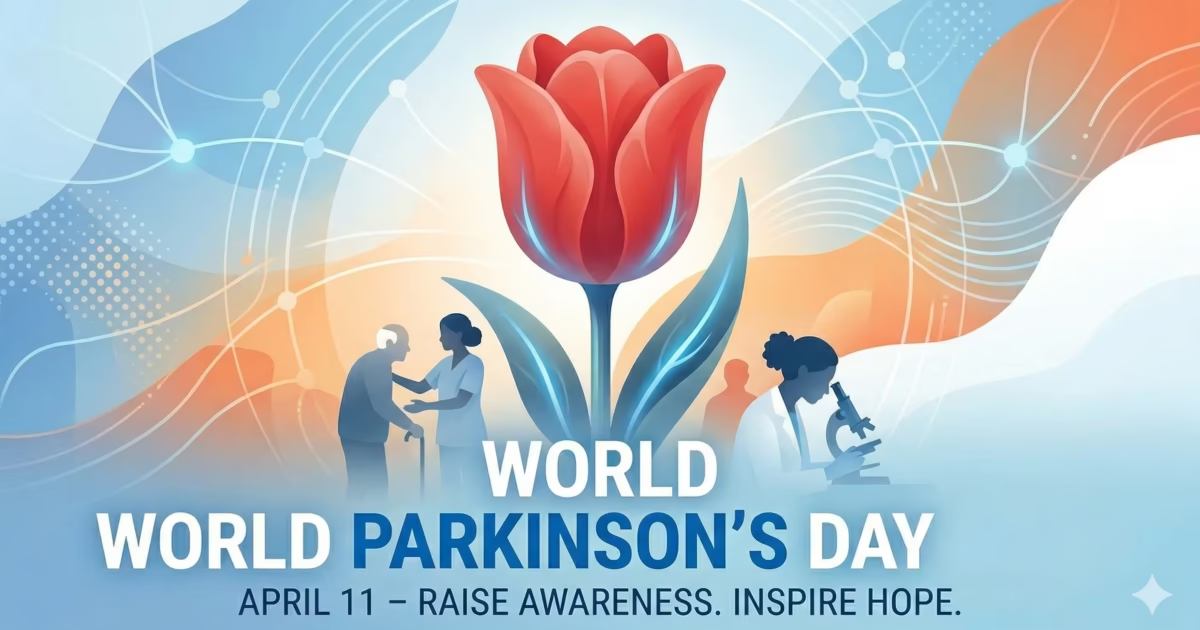
Neurological health is a critical aspect of our overall well-being, yet many conditions remain misunderstood or overlooked. World Parkinson’s Day serves as a powerful global reminder to pause, reflect, and amplify the voices of millions living with Parkinson’s disease. Celebrated annually, this day is not merely a date on the calendar; it is a worldwide movement dedicated to spreading awareness, fostering empathy, and accelerating the search for better treatments and a definitive cure.
By educating communities and highlighting the realities of the condition, World Parkinson’s Day aims to tear down social stigmas and build a supportive environment where patients and caregivers can thrive.
World Parkinson’s Day 2026 : Date, Day, and Theme
Date: April 11, 2026
Day of the Week: Saturday
For World Parkinson’s Day 2026, the global healthcare community and leading organizations like Parkinson’s Europe have rallied behind the official theme: “Bridge the Care Gap.” This highly relevant 2026 theme highlights an urgent challenge in today’s healthcare systems. While medical research and treatments are advancing, many individuals still face immense barriers—such as inconsistent access to movement disorder specialists, a lack of clear information upon diagnosis, and heavy reliance on unpaid family caregivers. “Bridge the Care Gap” is a call to action for governments, healthcare providers, and communities to ensure that every person living with Parkinson’s, regardless of their location or background, has equal access to the comprehensive, specialized care and support they deserve.
History and Origin: The Legacy of Dr. James Parkinson
The roots of World Parkinson’s Day trace back to April 11, 1997, when it was established by the European Parkinson’s Disease Association (now Parkinson’s Europe) and co-sponsored by the World Health Organization (WHO).
The date of April 11 was intentionally chosen to commemorate the birthday of Dr. James Parkinson (born in 1755). An observant London physician, Dr. Parkinson was the first person to formally identify and describe the condition as a medical syndrome. In 1817, he published his landmark medical paper, An Essay on the Shaking Palsy, which outlined the core motor symptoms of the disease. Over two centuries later, his pioneering work remains the foundation of our understanding of Parkinson’s, making his birthday the perfect occasion to honor medical progress and patient resilience.
The Global and Social Significance
The significance of World Parkinson’s Day lies in its ability to bring a complex, often invisible disease into the global spotlight. Parkinson’s disease is a progressive, neurodegenerative condition that affects movement, mood, sleep, and various other aspects of daily living. Because it primarily affects older adults—though young-onset Parkinson’s does occur—it is a pressing concern for the world’s aging population.
Socially, the day is crucial for combating the isolation that many patients feel. The physical symptoms, such as tremors or a masked facial expression, can lead to unwarranted social stigma or misunderstanding. World Parkinson’s Day humanizes the statistics, proving that a life with Parkinson’s can still be fulfilling when backed by community support, proper medical care, and compassion.
Objectives Behind Celebrating World Parkinson’s Day
The global observance is driven by several critical objectives:
- Promoting Early Diagnosis: Educating the public about early warning signs so individuals can seek timely medical intervention, which drastically improves quality of life.
- Destigmatizing the Disease: Breaking down myths and misconceptions to create a more inclusive society for those exhibiting physical symptoms.
- Advocating for Better Healthcare: Pushing for policy changes that provide better resources, mental health support, and rehabilitation services.
- Accelerating Research: Encouraging fundraising and investment in scientific research to find disease-modifying therapies and, ultimately, a cure.
Symbols of Hope: The Red Tulip and “The Spark”
When participating in World Parkinson’s Day, you are likely to see two prominent symbols:
The Red Tulip: Just as the pink ribbon represents breast cancer awareness, the red tulip is the global symbol for Parkinson’s. The story began in 1980 when J.W.S. Van der Wereld, a Dutch horticulturalist living with Parkinson’s, cultivated a stunning red and white tulip. He named it the “Dr. James Parkinson” tulip to honor the physician and the International Year of the Disabled. In 2005, at the 9th World Parkinson’s Disease Day Conference in Luxembourg, the red tulip was officially adopted as the worldwide symbol of the disease.
The Spark: In 2022, a coalition of international Parkinson’s organizations introduced a new emblem called “The Spark.” Inspired by the shape of a lightning bolt, it represents the electrochemical neurotransmitter dopamine—the vital chemical that diminishes in the brains of those with Parkinson’s. The Spark represents the energy, urgency, and inspiration of the global community uniting to end the disease.
How People Celebrate Worldwide
Across the globe, April 11 is marked by diverse, community-driven activities that foster solidarity:
- Light Up Blue / Spark the Night: Iconic landmarks, monuments, and individual homes worldwide are illuminated in blue on the night of April 11 to shine a light on the hidden struggles of Parkinson’s and show solidarity.
- Community Walks and Runs: Events like “Moving Day” gather patients, families, and allies to raise funds and demonstrate that movement is a powerful tool against the disease.
- Educational Seminars: Hospitals, clinics, and support groups host webinars and expert briefings to share the latest advancements in treatment and daily management.
- Creative Campaigns: Many individuals participate by knitting blue tulips, hosting local bake sales, sharing their personal “PD Stories” on social media using the hashtag #WorldParkinsonsDay, or wearing tulip pins to spark conversations.
Relevance in Today’s World: Key Facts and Statistics
Understanding the scope of Parkinson’s is essential to grasping the importance of the day. Here are key facts that highlight its modern relevance:
- Fastest Growing Neurological Disorder: Parkinson’s is currently the fastest-growing neurological condition in the world.
- Global Reach: It is estimated that more than 10 to 12 million people worldwide are living with the disease, a number expected to rise significantly as the global population ages.
- Not Just Tremors: While motor symptoms like resting tremors, rigidity, and bradykinesia (slowness of movement) are well-known, Parkinson’s also brings invisible “non-motor” symptoms, including anxiety, depression, sleep disorders, and loss of smell.
- No Cure, But Treatable: There is currently no cure for Parkinson’s, but medications (like levodopa), surgical options (like Deep Brain Stimulation), and lifestyle modifications (like vigorous exercise) can effectively manage symptoms for many years.
How You Can Contribute and Make a Difference
You do not need to be a medical professional to make a meaningful impact on World Parkinson’s Day. Here are practical ways anyone can contribute:
1. Educate Yourself and Others Take the time to learn about the early signs of Parkinson’s and share factual, scientifically accurate information on your social media platforms. Use your voice to dispel myths and amplify the realities of living with the disease.
2. Support Caregivers Spouses, children, and friends often act as unpaid, full-time caregivers. Check in on the caregivers in your community. Offer to run errands, provide a listening ear, or sit with their loved one so the caregiver can have a few hours of much-needed respite.
3. Participate in Local Events Look for local or virtual events in your area. Whether it is walking in a 5K, attending an educational forum, or simply wearing blue or a red tulip pin on April 11, your visible participation matters.
4. Contribute to Research and Charities Consider making a financial donation to reputable Parkinson’s charities and research foundations. Even small contributions help fund the critical clinical trials and community support programs needed to bridge the care gap and, one day, find a cure.

